How to Choose a Sportsbook Platform: Operator Checklist
Compare sportsbook platforms on odds feeds, live coverage, trading tools, bet builder, cash out, integrations and commercial terms before you buy.
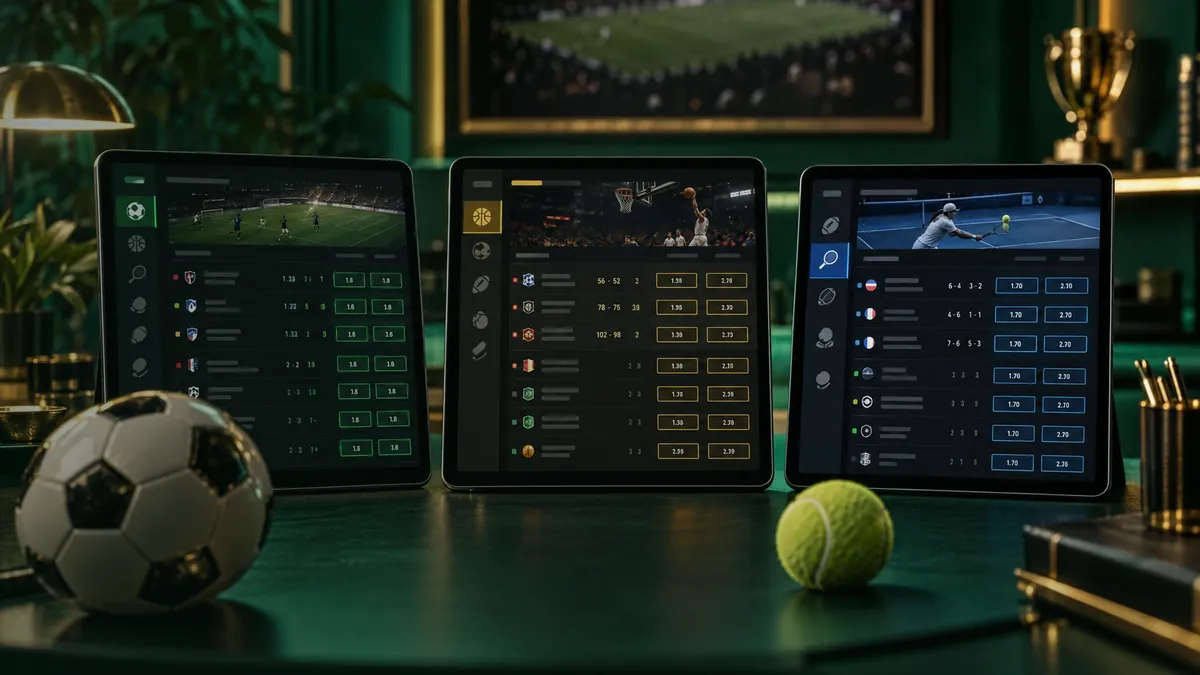
A sportsbook can look convincing in a demo and still fail your business once betting starts. Missing local competitions, slow market suspensions, unclear trading responsibilities or expensive contract exclusions can turn a promising launch into an operational problem.
Your task is not simply to find the platform with the most markets. It is to establish whether its coverage, controls, integrations and commercial terms fit your target jurisdiction, customer base and operating team. Use the checklist below to compare suppliers on evidence rather than presentation quality.
1. Define your operating model before comparing platforms
Start with a short requirements brief. Without one, each supplier will demonstrate its strongest features, leaving you to compare different products against different assumptions.
Specify your target markets, licence structure, priority sports, intended channels and available internal resources. Decide whether you need a managed sportsbook, your own trading operation or a hybrid arrangement. A managed service can reduce day-to-day workload, but it does not remove the operator’s regulatory accountability.
Separate essentials from future additions
Classify requirements as launch-critical, required after launch or optional. For each critical requirement, ask whether it is available today, requires configuration or depends on development.
Your brief should identify:
- The sports, competitions and languages essential to your audience.
- Expected demand around major events and busy match windows.
- Ownership of trading, customer support and settlement disputes.
- Required wallet, payments, identity verification and reporting connections.
- Local obligations covering player protection, betting restrictions and data handling.
This is not legal advice; check current requirements with the official regulator for each target jurisdiction.
2. Verify data, odds feeds and live coverage
Coverage counts alone are poor buying criteria. A supplier may list a competition while offering only basic pre-match markets, limited live betting or inconsistent settlement data.
Ask for a coverage matrix showing sports, competitions, market types and pre-match versus in-play availability. Check the competitions your customers actually follow, including regional leagues and less internationally prominent sports. Local relevance can matter more than a large global catalogue.
Trace the data supply chain
Establish which feeds support fixtures, odds, scores and results. Clarify whether the supplier provides the necessary contractual rights to use each feed in your territories and channels. Streaming, live visualisation and statistical displays may have separate rights and costs.
For live betting, examine the full path from event data to the customer interface. Ask how the platform handles delayed updates, feed failures, suspended markets and conflicting results. A backup feed is useful only if switching procedures and settlement rules are clear.
| Evaluation area | Evidence to request | Warning sign |
|---|---|---|
| Local coverage | Competition-level list with available markets | Only headline sports totals |
| Live reliability | Incident history, monitoring and fallback procedures | No explanation of suspension behaviour |
| Odds updates | Timestamped tests across representative events | Performance claims without test conditions |
| Settlement | Rules, correction workflow and audit records | Unclear ownership of disputed results |
| Feed rights | Written territorial and usage permissions | Rights assumed rather than confirmed |
Test coverage during real events, not only with simulated matches. Watch whether odds, scores and market availability stay consistent across the website, mobile experience and bet slip.
3. Assess trading tools and risk ownership
The key question is who can take action when exposure rises, a feed looks wrong or a customer disputes a rejected bet. A dashboard is not enough if your team cannot apply the necessary controls.
Ask the supplier to demonstrate event-level and market-level exposure monitoring, customer limits, stake approval workflows and escalation procedures. Review how limits interact: a customer limit, market limit and maximum payout rule may each produce a different outcome.
Test operational decisions, not just screens
Use practical scenarios during evaluation:
- A heavily backed local team creates concentrated liability.
- A price changes while the customer submits a bet.
- A live feed stops updating during an important match.
- A result is corrected after bets have been settled.
- A trading incident occurs outside your team’s working hours.
For each scenario, identify who receives the alert, who decides what happens and which actions are recorded. Managed trading contracts should define service hours, escalation contacts and the scope of any liability allocation.
Keep financial risk controls distinct from responsible-gambling controls. Trading tools protect the book; player-protection systems must support applicable limits, exclusions, monitoring and interventions. Confirm that sportsbook activity reaches those systems promptly and that account restrictions apply across channels.
4. Examine bet builder, cash out and the betting journey
Bet builder and cash out should be evaluated as operational capabilities, not interface badges. Both depend on pricing logic, market availability, risk settings and clear customer communication.
Bet builder: understand correlation and restrictions
Check which sports and competitions support bet builder and whether availability differs between pre-match and live betting. Ask how the platform prices correlated selections, rejects incompatible combinations and limits exposure.
Test combinations involving player markets, match outcomes and totals. Review what happens when a participant does not play, a fixture changes or one selection becomes void. Settlement rules should be understandable to customers and accessible to support staff.
Cash out: check when it is unavailable
Cash out is generally conditional, not guaranteed. Ask which bet types qualify, whether partial cash out is supported and how offers change during market suspensions or price updates.
Confirm how the interface handles an offer that expires before acceptance. The wallet, bet history and transaction record should show a consistent outcome, including after connection failures or repeated requests.
Finally, test the complete journey on common mobile devices: finding local events, adding selections, accepting price changes, placing bets and reviewing settlements. Check accessibility, local terminology, time zones and currency formatting. Clear restrictions are preferable to features that appear available but repeatedly fail at submission.
5. Validate integration, security and operational readiness
A sportsbook must fit your wider platform, including player accounts, wallet, payments, verification, reporting and support tools. Ask for documentation and sandbox access before committing to an integration schedule.
Clarify whether the sportsbook uses your existing wallet or requires its own ledger. Map debits, winnings, refunds, voids, settlement corrections and cash-out transactions. Confirm how duplicate requests, timeouts and retries are handled without creating incorrect balances.
Build an acceptance plan
Require tests covering:
- Account restrictions, self-exclusion and applicable player limits.
- Currency precision, transaction references and reconciliation.
- Reporting completeness and traceability from bet to wallet entry.
- Peak-event load, recovery procedures and service monitoring.
- Staff permissions, audit logs and access revocation.
- Release management, incident communication and rollback procedures.
Agree which party owns each integration and production issue. Confirm data access, retention, hosting arrangements and security responsibilities in writing.
Integration timelines vary by jurisdiction, supplier and scope. Ask for a milestone-based estimate that states assumptions, dependencies and acceptance criteria rather than relying on a launch date quoted during a sales call.
6. Compare commercial models and contract obligations
Compare total operating cost, not just the headline revenue share. Depending on the supplier, pricing may combine setup charges, recurring fees, revenue share, minimum commitments and separate feed or feature costs.
Request a worked calculation using your own business assumptions. Avoid treating supplier forecasts as guaranteed demand.
| Commercial item | What to clarify |
|---|---|
| Revenue share | Calculation base and treatment of bonuses, taxes, voids and adjustments |
| Minimum fees | Whether they replace or supplement other charges |
| Data and features | Included coverage and separately priced feeds, streaming or tools |
| Managed trading | Service scope, support hours and excluded responsibilities |
| Integration changes | Charges for new connections, customisation and maintenance |
| Contract exit | Notice, data export, unsettled bets and transition support |
Costs vary by jurisdiction, supplier and scope. Model both a quieter trading period and a successful growth period: minimum fees can dominate one, while variable charges shape the other.
Check service levels, remedies, renewal terms and rights to change prices or coverage. Score suppliers against the same weighted requirements, with greater weight on launch-critical capabilities. Unresolved gaps should remain visible rather than disappear inside an overall score.
How to move forward with VertaMatrix
Bring VertaMatrix your target jurisdictions, priority sports, operating model and existing technology stack. A sportsbook scoping discussion should establish the coverage, trading responsibilities, integrations and commercial assumptions needed for a comparable proposal, whether you are adding sports betting to an existing operation or considering a turnkey launch.
Use that discussion to identify any related casino API, payments or licensing-advisory requirements, then request confirmation of scope, dependencies and delivery responsibilities. The next step should be a documented evaluation and test plan—not a commitment based solely on a demonstration.
Frequently asked questions
What is the difference between a managed and a self-traded sportsbook?+
A managed sportsbook delegates agreed pricing, trading and risk tasks to a supplier, while a self-traded model leaves more of those functions with the operator. The contract should define the precise division of responsibility; regulatory accountability does not automatically transfer to the supplier.
How should operators evaluate live sportsbook coverage?+
Request competition-level coverage and test representative live events for odds updates, market suspensions and settlement consistency. Confirm feed rights, fallback procedures and who handles incidents rather than relying on the total number of advertised events.
Which costs should be included when comparing sportsbook platforms?+
Include setup, recurring fees, revenue share, minimum commitments, data feeds, managed trading, integrations and separately priced features. Costs vary by jurisdiction, supplier and scope, so compare written calculations using the same operating assumptions.
Let's plan these steps together.
Share your target market and timeline, and we will map out the right launch model and roadmap for you.
Talk to an expertRelated guides
All guides → Sports
Virtual Sports Betting: Content, Margins and Operations
A practical operator guide to virtual sports formats, provider selection, betting cycles, margin controls and positioning alongside a sportsbook.
 Casino
How to Launch an Online Casino: An Operator Roadmap
Plan your online casino launch with practical steps for licensing, platform selection, games, payments, staffing, testing and responsible gambling.
 Guide
How to Launch a Sports Betting Site: An Operator Guide
Plan your sportsbook launch with practical guidance on platforms, licensing, odds, risk, payments, marketing and the first months of operations.